A good personalised book for a child has a story that is genuinely fun to read aloud, artwork that stays consistent from page to page, and a format that suits the child’s age, with their name or likeness woven into the plot rather than simply dropped onto the page. Before you order, preview every page, check the delivery date for your country, and read how the seller stores and deletes your child’s photo and details. Chosen well, it becomes the book a child asks for again and again.
Disclosure: this article contains affiliate links, marked “(affiliate link)”. If you buy through one, Freyja Publishing may earn a small commission at no extra cost to you. It does not change what we recommend.
This guide looks at personalised books from both sides: what makes a story worth reading, and what makes a book worth buying. It covers the main types, how to match a book to a child’s age, a step-by-step ordering checklist, how to protect your child’s photos and details, and how to turn one special book into a lasting reading habit.
At a glance
- Story first, gimmick second. A name on every page cannot save a weak story. Read the full preview aloud before you buy.
- Match the format to the age. Sturdy board books for babies and toddlers, picture books for preschoolers, longer stories for early readers.
- Order early. Books are printed to order, often take longer than standard books to arrive, and usually cannot be returned for a change of mind.
- Share as little as possible. A first name and one clear photo are usually enough. Check how long the seller keeps uploads.
- Pair it with classics. A personalised book works best as one special title in a varied home library.
Why personalised books appeal to children
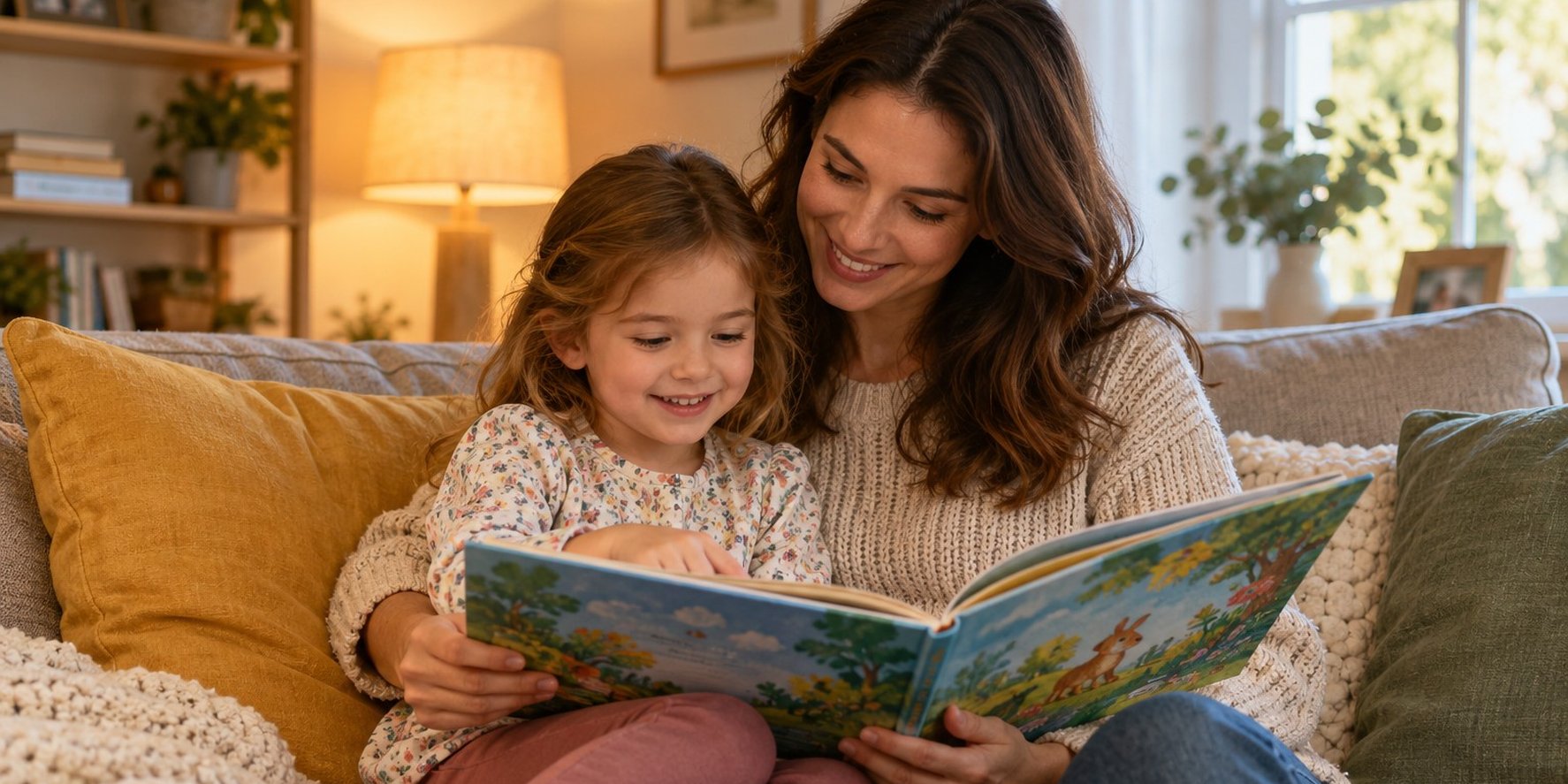
Young children are naturally fascinated by themselves and the people around them. A story that uses their name, their friends, their pet or their home town turns them from a listener into the main character. That sense of ownership is the real gift: many families find a personalised book becomes the one a child brings to bedtime night after night.
That repetition is valuable in itself. Hearing the same story many times lets young children predict what comes next, join in with familiar lines and, eventually, recognise words on the page, often starting with their own name. Word-learning research, including studies by Jessica Horst and colleagues at the University of Sussex, has found that preschoolers learn new words more readily when they hear the same story repeatedly. Paediatric and literacy organisations, including the American Academy of Pediatrics and the UK’s National Literacy Trust, encourage parents to read aloud with children every day from infancy, and anything that makes a child want to sit down with a book supports that habit.
Researchers who study personalised books, such as Natalia Kucirkova, also point out the limits: children need stories about other people and other worlds too. A personalised book works best as one special title among many. Our guide to building a lifelong reading habit explains how to grow a child’s library over time.
Types of personalised books compared
Personalised books range from a simple name change to fully illustrated stories built around one child. The type you choose decides how personal the book feels, how much information you need to share and how long it takes to make.
| Type | What is personalised | Details you share | Best for |
|---|---|---|---|
| Name-only | The child’s name printed through a ready-written story | First name | Quick, simple gifts and very young children |
| Character-builder | A cartoon hero with chosen hair, skin tone, glasses and clothes | First name and appearance choices, no photo | Families who want a likeness without uploading a photo |
| Photo or face | The child’s face added to the illustrations | First name and a photo | The biggest “wow” moment for preschoolers and early readers |
| Dedication and family | Family members, pets and a personal message | Names and a message | New babies, new siblings and gifts from grandparents |
| Learning books | Alphabet, counting or first-word pages built around the name | First name | Toddlers and children starting to recognise letters |
If privacy matters most to you, a character-builder book gives the child a hero who looks like them without sharing a single photo.
Where to order a personalised picture book
Make a book where your child is the hero. Magic Story creates personalised picture books with your child’s name and face in the story. Preview the pages before you order, and check the delivery date for your country.
Create a personalised book at Magic Story → (affiliate link)
See books with your child’s face in the story (affiliate link)
Whichever seller you use, the checks below apply.
Choosing the right book for the age
Babies and toddlers (0 to 3)
Choose short text, bold pictures and sturdy pages. Board books or thick hardcovers survive chewing and grabbing far better than thin paper pages. At this age the book is as much a shared moment as a story, so look for simple, rhythmic lines you will enjoy reading aloud dozens of times.
Preschoolers (3 to 5)
Picture books with a simple adventure and repeated phrases they can join in with are ideal. This is often the age when seeing their own name in print is most exciting, and a photo or character-builder book can make the biggest impression.
Early readers (5 to 8)
Look for slightly longer stories with clear, readable fonts and plenty of white space. A personalised book can give a reluctant reader an extra reason to try, especially if the story connects to a real interest such as space, animals or football.
Older children
Personalised chapter books, activity books and journals exist, but many older children prefer to choose their own stories and may find a book starring themselves a little young. Ask before you buy, or consider a journal or a “write your own story” kit instead.
How to order: a step-by-step checklist
Personalised books are made to order, so they usually cannot be returned like an ordinary book. Working through these steps saves disappointment later.
- Check the deadline. Find the latest order date for delivery to your country before the occasion, and allow extra time before major holidays.
- Read the policies first. Look at the returns policy for misprints or damage, delivery costs, where the book ships from, and the privacy policy for uploaded photos.
- Enter details carefully. Double-check the spelling of every name, including family members and pets, and any accents or hyphens.
- Choose the photo (if needed). Use a clear, front-facing photo in good light against a plain background.
- Read the full preview aloud. Does the story have a beginning, middle and end? Is it fun to read, or is it pages with a name dropped in?
- Inspect the artwork. Check that faces and characters look consistent from page to page and that the child’s likeness looks natural.
- Confirm the format. Check hardback or softback, page count, book size and paper type against the child’s age.
- Proofread the dedication. It is the page people reread for years, so make sure it says exactly what you mean.
- Save your confirmation and the expected delivery date, and check the parcel as soon as it arrives so you can report any print fault quickly.
Protecting your child’s photo and details
Photo books need a picture of your child, and most personalised books need a name and sometimes a birthday or home town. Treat this like any other personal information you share online:
- Read the privacy policy before you upload. Look for how long photos are kept, whether they are deleted after printing, and whether they are ever used for marketing or to train software.
- Know your rights. Data protection laws differ by country. In the UK and EU, for example, the GDPR gives you the right to ask a company to delete personal data it holds. Elsewhere, check the seller’s own deletion policy.
- Share only what the book needs. A first name is usually enough. Avoid full names, addresses or school names unless they are essential to the story.
- Choose a neutral photo. A plain background prints well and reveals nothing about your home, school uniform or location.
- Get permission from the child’s parents if you are a grandparent, relative or friend ordering a gift, and ask them to choose the photo.
- Keep the preview link private. Do not post order previews publicly on social media.
Personalised books compared with other book gifts
It helps to know what a personalised book does well, and where another kind of book gift might suit better.
| Gift | Strengths | Trade-offs | Suits |
|---|---|---|---|
| Personalised book | Highly memorable keepsake; strong sense the story belongs to the child | Usually costs more than a standard picture book, takes longer to arrive, rarely returnable | Milestones, birthdays, gifts from grandparents |
| Classic picture book | Often the best-written stories, tested by generations of readers; available straight away | Less personal, though a handwritten dedication goes a long way | Any occasion, last-minute gifts |
| Book bundle or series set | Several stories to choose from; good value | Less of a single “moment” | Children who already love reading |
| Book subscription | A new book arrives regularly, keeping excitement going for months | Ongoing cost; check how to cancel | Families building a home library |
Many families combine approaches: a personalised book as the main present, with a classic picture book or two alongside it. The child gets the thrill of seeing themselves in a story, plus well-loved tales to grow into.
Gift occasions that work well
- New baby or new sibling: a story that welcomes the baby, or helps an older child feel included when a sibling arrives.
- Birthdays: a book with the child’s age and name makes a keepsake for that year.
- Holidays: festive stories with the child as the hero can become a family tradition, but order well ahead of peak season.
- Starting school: a story about a first day can help a child feel brave and excited.
- From grandparents: a dedication page with a personal message turns the book into a lasting family keepsake, especially if grandparents live far away.
Common mistakes to avoid
- Judging by the cover and the name. Skipping the full preview is the most common reason a personalised book disappoints.
- Ordering too late. Made-to-order printing and international shipping can take weeks in busy periods.
- Wrong format for the age. Thin paper pages rarely survive a toddler; a baby-style book can feel babyish to a seven-year-old.
- Misspelt names. Because books are made to order, a typo is usually your cost to fix.
- Oversharing personal details. Full names, addresses and school names are rarely needed for the story.
- Ordering a photo book without asking the parents. Some families prefer not to share children’s photos online at all.
Making it part of a reading habit
The real value of a personalised book is the moment it creates: a child who runs to the bookshelf because a story is theirs. You can build on that moment:
- Read it together, and let your child point out their name on each page.
- Pair it with similar stories. If your child loves their personalised space adventure, follow it with library books about space.
- Try a series. Children who enjoy a character often want more of the same. Our article on series planning explains why series keep readers coming back, and the same is true for young readers.
- Add audio. Audiobooks and read-along stories keep children engaged in the car or at quiet time. See our guide to audiobooks.
- Let them make their own. Older children can write and illustrate a short book starring themselves, which is a fun holiday project and great writing practice.
If a personalised book sparks a grown-up’s ambition to create a children’s story for the family, our guides to writing a children’s book, hiring a children’s book illustrator and self-publishing a children’s book walk through each stage.
Sources this guide draws on: American Academy of Pediatrics, policy statement “Literacy Promotion: An Essential Component of Primary Care Pediatric Practice”; UK National Literacy Trust guidance on reading with young children; Horst, Parsons and Bryan, “Get the story straight: contextual repetition promotes word learning from storybooks”, Frontiers in Psychology; writing on personalised books by Natalia Kucirkova; UK Information Commissioner’s Office guidance on the right to erasure.
Writer’s toolkit for this guide
Books and tools we rate for this stage of writing and publishing. As an Amazon Associate, Freyja Publishing earns from qualifying purchases, at no extra cost to you. Prices and availability are set by Amazon and may vary by country.
- Writing Picture Books by Ann Whitford Paul (revised edition)
A hands-on guide from story idea to submission.
View on Amazon - LEUCHTTURM1917 A5 Hardcover Notebook
Numbered pages and an index, handy for plot notes and research.
View on Amazon - Amazon Kindle Paperwhite (16 GB)
Check how your ebook really looks on the device most readers use.
View on Amazon
Frequently asked questions
What age are personalised books best for?
Most personalised picture books suit children from about one to eight, with the strongest reaction often around three to six, when children love seeing their own name in print. Board-book versions suit babies and toddlers. Older children may prefer personalised journals or choosing their own books.
Can you return a personalised book?
Usually not for a change of mind, because each copy is made to order for one child. Most sellers will replace books that arrive damaged or misprinted, so check the policy before ordering and inspect the book when it arrives.
How long do personalised books take to arrive?
It depends on the seller, where the book is printed and where you live. Printing to order adds time, and holiday periods are busiest, so check the seller’s latest order date for your country and order early.
Is it safe to upload my child’s photo?
It can be, if you choose a seller with a clear privacy policy that explains how long photos are kept and whether they are deleted after printing. Use a plain-background photo, share only a first name, and ask the parents first if the child is not yours.
Are personalised books good for learning to read?
They can help by making a child keen to hear the same story often, and repeated reading supports word learning. Children still need a wide range of other books, so treat a personalised title as one special part of a varied library.
A personalised book is one of the most memorable gifts you can give a young child. Choose a good story as well as a good gimmick, preview every page, order in good time, and look after your child’s photo and details. Then read it together, often.