
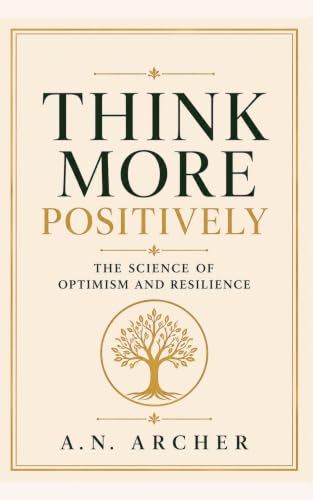
Psychology for Life · Book 5
The Science of Optimism and Resilience
By A.N. Archer · Published by Freyja Publishing
‘Just think positive’ is useless advice, and when life is genuinely hard it can make things worse. Real optimism is different: a way of explaining setbacks, directing attention and taking action that can be measured, taught and practised.
How To Think More Positively separates the evidence from the wishful thinking. Drawing on Martin Seligman’s work on learned optimism and explanatory style, Charles Snyder’s hope theory, Barbara Fredrickson’s broaden-and-build research, gratitude studies and the tools of cognitive therapy, it shows what actually shifts a mind toward the positive — and what doesn’t.
Choose your edition on Amazon
About How To Think More Positively
“Just think positive” is useless advice, and when life is genuinely hard it can make things worse. Real optimism is something different and more useful: a way of explaining setbacks, directing attention and taking action that can be measured, taught and practised.
How To Think More Positively separates the evidence from the wishful thinking. It draws on Martin Seligman’s work on learned optimism and explanatory style, Charles Snyder’s hope theory, Barbara Fredrickson’s broaden-and-build research, gratitude studies and tools from cognitive therapy.
What you’ll explore
Healthy optimism versus forced positivity. Optimism is not pretending everything is fine. The book explains the difference and why it matters.
Explanatory style. Seligman’s research looked at how people explain bad events to themselves: as permanent or temporary, all-encompassing or specific, and entirely their own fault or not. These habits of explanation are linked to resilience, and the book shows how they can change.
Hope as a two-part skill. Snyder’s hope theory describes hope as having both the will to reach a goal and the ability to see routes to it. The book shows how to build both.
Practices with evidence behind them. Fredrickson’s work suggests positive emotions broaden attention and help build lasting resources. The book covers gratitude, savouring and mindfulness practices that have been studied.
Steadiness under pressure. How to recover from setbacks without spiralling, and what the research does and doesn’t show about optimism and wellbeing.
Social optimism. How positive expectation shapes relationships with the people around you.
Thirteen chapters include practical exercises throughout, a fully referenced Notes section so you can check the studies yourself, and a 30-Day Optimism Reset to put it into practice.
Who this book is for
Readers who want a more hopeful outlook without empty slogans. It is written for general readers, not specialists.
At a glance
- Series: Psychology for Life, Book 5 of 20
- Author: A.N. Archer
- Publisher: Freyja Publishing
- Length: about 212 pages
- Formats: Kindle eBook, paperback and hardcover
- Kindle edition included with Kindle Unlimited
This book is educational, not clinical.
If you enjoy this book
Each title in the Psychology for Life series stands on its own. Readers of this book often go on to:
- Quiet Confidence (Book 13)
- Rewrite Your Inner Voice (Book 18)
- Understanding Emotion (Book 10)