To write a short story, build it around one character facing one central conflict, start as close to the moment of change as you can, keep the cast and settings small, and end on an image or decision that shows how the character (or the reader’s understanding) has changed. Most short stories run from about 1,000 to 7,500 words, so every scene has to move toward that single turning point.
This guide includes a few product links near the end. As an Amazon Associate, Freyja Publishing earns from qualifying purchases, at no extra cost to you.
This guide walks through a seven-step method and builds one short story, written for this guide, live through every step. It also sets out the word-count bands for flash fiction, short stories, novelettes and novellas, and explains how indie authors use short fiction as reader magnets and newsletter bonuses.
At a glance
- One of everything: one main character, one central conflict, one major change. Subplots belong in novels.
- Start late, end early. Open just before the change begins and finish soon after it lands.
- Length bands: flash fiction is generally under about 1,000 words; SFWA defines a short story as under 7,500 words.
- Endings carry the weight. A short story is often remembered for its last line or final image.
- Short fiction has a business use: many indie authors offer a free story to readers who join their email list.
What is a short story?
A short story is a complete piece of fiction that can usually be read in one sitting. It has the same basic parts as a novel (a character, a want, an obstacle and a change) but compresses them. Where a novel can explore many characters and threads, a short story typically focuses on a single situation or moment of decision.
Short story word count and other short forms
There is no single legal definition, but the clearest widely used boundaries come from the Science Fiction and Fantasy Writers Association (SFWA), whose Nebula Award categories are also used informally by many writers outside speculative fiction.
| Form | Typical length | What it can hold | Common uses |
|---|---|---|---|
| Flash fiction | Generally under about 1,000 words (drabbles are exactly 100) | One moment, one image, one turn | Competitions, magazines, social media |
| Short story | Under 7,500 words (SFWA) | One conflict and a small cast | Magazines, anthologies, reader magnets |
| Novelette | 7,500 to under 17,500 words (SFWA) | A conflict with one or two complications | Genre magazines, series bonuses |
| Novella | 17,500 to under 40,000 words (SFWA) | A full arc with a simple subplot | Prequels, standalone ebooks |
| Novel | 40,000 words or more (SFWA) | Multiple threads and characters | The main commercial format |
Magazines and competitions set their own limits, so always check the guidelines before you submit. The live guide to how long a novel is covers longer forms and genre word counts.
How to write a short story in seven steps
The worked example below follows one story from idea to ending. It is invented for this guide.
Step 1: Find a story-sized idea
A short story idea is usually smaller than a novel idea. Instead of “a family falls apart over decades”, think “a daughter clears out her mother’s flat and finds one thing she cannot explain”. Good short story ideas often take the form what if this one thing happened, on this one day?
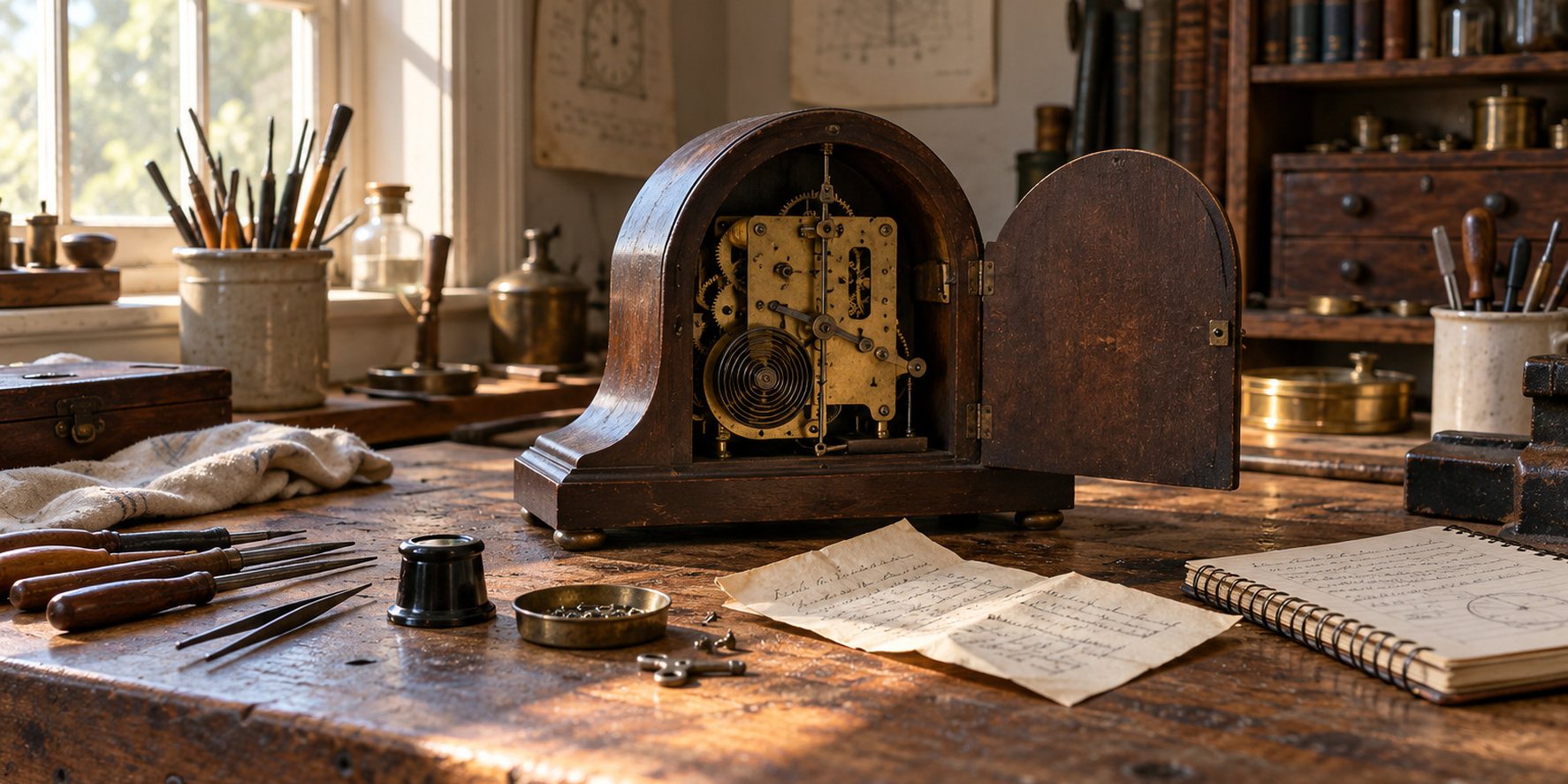
Worked example: What if a woman who repairs clocks is asked to fix one that her late father broke on purpose?
Step 2: Choose one character and one want
Pick your main character and decide what they want in this story, not in life. The want should be concrete enough to act on. Give them one trait that creates friction with that want.
Worked example: Lena, 40, a clock repairer, wants to finish the job quickly and get paid. Her trait: she avoids anything to do with her father, who left when she was ten.
Step 3: Define the single central conflict
The conflict is what stands between your character and the want. In a short story, it should be one main pressure, external, internal or both.
Worked example: the customer, an elderly neighbour of her father’s, tells Lena he broke the clock deliberately the night he left, and wants her to know why before she repairs it. Lena’s conflict: she can do the job without hearing the story, or she can listen.
Step 4: Start late
Open as close as possible to the moment things change. Backstory can arrive in a line or two, woven into action. The live guide to how to start a story covers first lines and openings in detail.
Worked example opening: “The clock arrived in a pillowcase, which was the first wrong thing.” Within half a page, the customer names Lena’s father.
Step 5: Compress the middle
Most short stories need only two to four scenes. Each scene should raise the pressure or reveal something new. Combine characters and settings wherever you can, and let dialogue carry information; the guide to writing dialogue helps keep it natural.
Worked example scenes:
- The clock arrives; Lena recognises her father’s handwriting on a repair tag inside.
- Lena dismantles the mechanism and finds a folded note jammed into the gears, unread.
- The neighbour returns; Lena must choose whether to hand over the note unopened or read it.
Step 6: Land the turning point
The climax is the moment the character makes a choice or realises something that cannot be undone. In a short story, it often comes very near the end.
Worked example: Lena reads the note. It is not an explanation; it is a list of every birthday he missed, with the date he meant to come back. She realises he tried, and failed, and that the broken clock was his way of stopping time on the day he left.
Step 7: End with resonance
A resonant ending leaves the reader with an image, an action or a line that echoes the whole story. It does not need to explain everything. Many classic stories end with a quiet shift rather than a big event: in Anton Chekhov’s “The Lady with the Dog” (1899), the lovers’ future is left unresolved; in O. Henry’s “The Gift of the Magi” (1905), the twist reframes what each character sacrificed.
Worked example ending: Lena fixes the clock, sets it to the right time and, for the first time, lets it run in her own workshop instead of returning it.
Short story checklist
- One main character with a clear want for this story.
- One central conflict, introduced on the first page.
- Opening starts close to the change, not with backstory.
- Two to four scenes, each raising pressure or revealing something.
- No more than three named characters, ideally.
- A turning point near the end where something cannot be undone.
- A final image or line that echoes the opening.
- Every sentence earns its place; cut any that do not.
- Word count fits the target market or competition.
Short story ideas: where to find them
If you are stuck for an idea, these prompts tend to produce story-sized situations rather than novel-sized ones:
- An object with a history: a letter, a key, a photograph, a piece of furniture that arrives at the wrong moment.
- A deadline: a character has one night, one phone call or one train journey to decide something.
- A return: someone goes back to a place, person or habit they left behind.
- A small lie: one untruth that grows harder to keep as the day goes on.
- A stranger: a brief encounter that changes how the main character sees their own life.
Whichever you choose, ask what this character stands to lose by the end of the day. If the answer is “nothing much”, raise the stakes before you start drafting.
Short story vs novel: what changes
| Element | Short story | Novel |
|---|---|---|
| Cast | One to three key characters | Many, with secondary arcs |
| Time span | Often hours or days | Weeks, years or generations |
| Plot | One conflict, one turn | Multiple turning points and subplots |
| Backstory | A line or implied | Can have whole chapters |
| Ending | Often open, quiet or a twist | Usually resolves the main threads |
The live list of seven plot structures shows how a story shape can be scaled down; a three-act structure still works in 3,000 words, just with much shorter acts.
How indie authors use short stories
Short fiction is hard to sell on its own at a meaningful price, but it has other uses in an author business:
- Reader magnets: a free story offered in exchange for joining your email list, ideally set in the same world or featuring a character from your novels. The guide to building an author email list explains how to deliver one.
- Newsletter bonuses: short scenes or epilogues for existing subscribers, which reward loyalty between releases.
- Anthologies and box sets: collaborations with other authors in your genre can introduce your work to new readers.
- Practice: finishing a short story teaches the whole arc of a story, from opening to ending, much faster than a novel.
- Magazine and competition credits: useful if you plan to query literary agents later.
The live guide to working out what an email list is worth covers the numbers side honestly, without promises.
Common mistakes
- A novel idea squeezed into 3,000 words. If the story needs multiple viewpoints and years of history, it is probably not a short story.
- Too much set-up. Paragraphs of backstory before anything happens lose readers quickly.
- Too many characters. Each new name divides the reader’s attention.
- No real change. A slice of life with nothing shifting can feel like a scene, not a story.
- Explaining the ending. Trust the reader; a final line that spells out the meaning weakens it.
- Ignoring submission guidelines for word count, formatting and simultaneous submissions.
- Skipping revision. Short stories reward line-by-line editing; see the guide to self-editing your writing.
Sources this guide draws on: the Science Fiction and Fantasy Writers Association’s Nebula Award length categories; the Science Fiction Encyclopedia’s entry on flash fiction; Anton Chekhov, “The Lady with the Dog”, and O. Henry, “The Gift of the Magi” (both public domain), summarised in this guide’s own words; general craft guidance on short fiction from writing organisations and magazines.
Writer’s toolkit for this guide
Books and tools we rate for this stage of writing and publishing. As an Amazon Associate, Freyja Publishing earns from qualifying purchases, at no extra cost to you. Prices and availability are set by Amazon and may vary by country.
- On Writing: A Memoir of the Craft by Stephen King
Part memoir, part masterclass on the daily habit of writing.
View on Amazon - Save the Cat! Writes a Novel by Jessica Brody
A beat-by-beat plotting method adapted for novelists.
View on Amazon - LEUCHTTURM1917 A5 Hardcover Notebook
Numbered pages and an index, handy for plot notes and research.
View on Amazon
Frequently asked questions
How many words is a short story?
Most short stories fall between about 1,000 and 7,500 words, and SFWA defines a short story as under 7,500 words. Pieces under roughly 1,000 words are usually called flash fiction. Magazines and competitions often set their own limits, so check before submitting.
What are the five elements of a short story?
The five elements usually taught are character, setting, plot, conflict and theme. In a short story, each one is compressed: a small cast, one or two settings, a single central conflict and a theme suggested rather than stated.
How do I write a good short story for beginners?
Start with one character who wants something specific on one particular day, and put a single obstacle in their way. Write a quick draft without stopping, then revise by cutting backstory and tightening the ending. Finishing a story matters more than perfecting the first one.
What is flash fiction?
Flash fiction is very short fiction, generally under about 1,000 words and often much shorter. It usually captures a single moment or turn. Specific forms include the drabble, which is exactly 100 words.
How long does it take to write a short story?
It varies widely. A flash piece might be drafted in an hour, while a polished 5,000-word story can take days or weeks once revision is included. Allow more time for editing than for drafting.
A short story asks you to do everything a novel does, in less space. Choose one character, one conflict and one change, start late, end with resonance, and finish it. Then write the next one.