There are thousands of books about writing, but only a handful that working authors keep reaching for. This guide covers eight of them, chosen because each one does a different job. Together they cover the writing life, story structure, character, revision and, for genre writers, romance structure.
You do not need all eight. The fastest way to waste money on craft books is to buy a pile and read none of them. Start with the section that matches the problem you have right now, whether that is finishing a draft, fixing a sagging middle, making characters feel real or tightening your prose.
The eight books at a glance
| Book | Author | Best for | Type of book |
|---|---|---|---|
| On Writing | Stephen King | Motivation, habits and the working life | Memoir plus craft advice |
| Bird by Bird | Anne Lamott | Getting started and staying kind to yourself | Essays on process and doubt |
| Save the Cat! Writes a Novel | Jessica Brody | Plotting a novel beat by beat | Structure and genre templates |
| Story Genius | Lisa Cron | Character-driven story and deep motivation | Building story from the protagonist outward |
| The Emotion Thesaurus | Angela Ackerman and Becca Puglisi | Showing emotion without clichés | Reference guide for body language and reactions |
| Self-Editing for Fiction Writers | Renni Browne and Dave King | Revising your own draft | Practical editing techniques |
| The Elements of Style | William Strunk Jr. and E.B. White | Clear, concise sentences | Short style reference |
| Romancing the Beat | Gwen Hayes | Romance and love-story structure | Beat sheet for the romantic arc |
How these books were chosen
Every book here has stayed in print and in conversation among writers for years, offers advice you can act on in your next writing session, and does a job the others on the list do not. That is why you will not find three near-identical plotting manuals. Each entry below says who the book suits and, just as importantly, where it falls short, because no single craft book fits every writer.
Books on the writing life
Before technique, most writers need habit, nerve and perspective. These two books are about showing up, and they are often the ones people reread. If you are stuck at the blank page, see our guide to beating writer’s block.
On Writing: A Memoir of the Craft, by Stephen King
What it is: Part memoir, part toolbox. King traces how he became a writer, then moves into direct advice on vocabulary, grammar, description, dialogue and revision.
What you will get from it: A clear picture of a professional writing routine, a strong case for reading widely, and plain-spoken views on cutting padding from a draft.
Best for: Writers who want honest encouragement alongside practical advice, whatever genre they write.
Worth knowing: The first half is memoir. If you only want technique, the craft section is shorter than the title suggests, and some of his opinions on style are personal preferences rather than rules.
See On Writing: A Memoir of the Craft on Amazon
Bird by Bird: Some Instructions on Writing and Life, by Anne Lamott
What it is: A warm, funny collection of essays on the realities of writing, from first drafts to publication anxiety.
What you will get from it: Permission to write badly on the first pass, a method for breaking overwhelming projects into small pieces, and a reminder that nearly every writer doubts themselves.
Best for: Anyone who freezes at the size of a project, or who needs a kinder inner voice while drafting.
Worth knowing: It is about attitude and process rather than plot mechanics. Pair it with a structure book if you want a framework.
See Bird by Bird: Some Instructions on Writing and Life on Amazon
Books on story and character
If your draft has plenty of words but not enough momentum, the problem is usually structure or character. These three approach it from different directions, so pick the one that suits how you think. Our guide to how to write a novel shows where each fits in the overall process.
Save the Cat! Writes a Novel, by Jessica Brody
What it is: Adapts the beat sheet used in screenwriting to novels, breaking a story into a sequence of key moments from the opening image to the final one.
What you will get from it: A map of where major turning points tend to fall, plus genre categories that help you see what readers expect from your type of story.
Best for: Plotters who like a clear scaffold, and anyone with a sagging middle who needs to see where the story should shift.
Worth knowing: Some writers find beat sheets too formulaic. Treat the beats as a diagnostic tool and a starting point rather than a rulebook.
See Save the Cat! Writes a Novel on Amazon
Story Genius, by Lisa Cron
What it is: Argues that a gripping story grows from the protagonist’s internal struggle and past, not from an outline of events, and walks you through building a novel from that foundation.
What you will get from it: A method for discovering why your character wants what they want, what they wrongly believe, and how that drives every scene.
Best for: Character-driven writers, and anyone whose plot works on paper but feels flat on the page. It pairs well with our list of character development questions.
Worth knowing: The process is thorough and takes time before you draft the story itself. If you prefer to discover a story by writing, adapt it rather than following every step.
The Emotion Thesaurus, by Angela Ackerman and Becca Puglisi
What it is: A reference book, not one to read cover to cover. Each entry lists the physical signals, internal sensations and behaviours that can accompany a particular emotion.
What you will get from it: A quick way to find fresh ways to show feeling, so characters do more than “sigh” or “clench their jaw”. It is useful when you are drafting dialogue scenes too; see our notes on writing dialogue in a novel.
Best for: Writers who know what a character feels but cannot find the right way to show it.
Worth knowing: Lists are a prompt, not a substitute for your own observation. Use them to spark ideas, then choose details that fit your character, or readers will notice repeated patterns.
See The Emotion Thesaurus on Amazon
Books on editing and style
A first draft is for getting the story down. These two books help with the rewrite, when you are turning a rough draft into clean, confident prose.
Self-Editing for Fiction Writers, by Renni Browne and Dave King
What it is: Written by two professional editors, it teaches you to spot common problems in your own manuscript, including dialogue mechanics, point of view, telling instead of showing, and pacing.
What you will get from it: A checklist mindset for revision, with before-and-after examples so you can see what a fix looks like.
Best for: Writers with a finished draft who want to edit before sending it to beta readers, an editor or a self-publishing platform.
Worth knowing: It focuses on fixing problems, not generating ideas, so it is most useful once you have pages to work on.
See Self-Editing for Fiction Writers on Amazon
The Elements of Style, by William Strunk Jr. and E.B. White
What it is: A compact guide to usage, composition and commonly misused words, first written by Strunk and later revised by White.
What you will get from it: A reminder to prefer the plain word, the active voice and the shorter sentence, in a book you can finish in an afternoon.
Best for: Anyone who wants a quick reference for clean prose, particularly for non-fiction and fiction narration.
Worth knowing: It is prescriptive, and some of its rules are debated by modern grammarians. Fiction often bends them on purpose, so treat the advice as a default to break deliberately.
See The Elements of Style on Amazon
For genre writers
Romancing the Beat, by Gwen Hayes
What it is: A story-structure guide built specifically for romance, mapping the stages of a love story from first meeting through conflict to the happy ending.
What you will get from it: A way to check that the romantic arc, not just the external plot, is carrying your book, and clarity on what romance readers expect at each stage.
Best for: Romance authors and writers of any genre with a strong love story at its centre.
Worth knowing: It is tailored to romance. If you write something else, a general structure book will serve you better.
See Romancing the Beat on Amazon
Which book should you read first?
- You cannot start or keep going: Bird by Bird, then On Writing.
- Your plot sags or stalls: Save the Cat! Writes a Novel.
- Your characters feel flat: Story Genius, with The Emotion Thesaurus for the details.
- You have a finished draft: Self-Editing for Fiction Writers, then The Elements of Style.
- You write romance: Romancing the Beat, alongside one general structure book.
A simple reading order for new novelists
If you are starting from nothing, read On Writing or Bird by Bird for momentum, then one structure book, and write your draft before you read anything else. Bring in Self-Editing for Fiction Writers only after you have a complete draft. Reading about revision too early is a common way to stall a first draft.
How to get the most from a craft book
- Read with a pen and one active project in mind, not as general entertainment.
- Apply one idea at a time to your own pages before moving on.
- Keep a notes file of the techniques you actually use.
- Expect to disagree with parts. Craft advice is a set of options, and your own voice decides what stays.
Frequently asked questions
Do I need more than one book on writing? Not at the start. Choose the one that matches your current problem, apply it, then add another when a new problem appears.
Are these books useful for self-published authors? Yes. Craft is craft, whether you publish independently or traditionally, and the editing books are especially helpful when you are your own first editor.
Should I buy print or ebook? Print suits books you will annotate and flip through, such as the reference and editing guides. Ebooks are handy when you want to search for a specific topic.
Will a craft book make me a better writer by itself? No. It gives you tools, and the improvement comes from using them on your own pages.
One more book for the doubts that come with writing
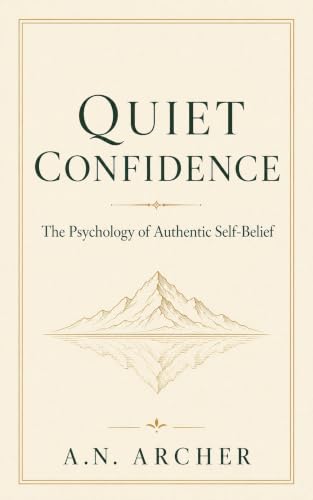
Craft books fix technique, but many writers are held back by something quieter: the nagging voice that says the work is not good enough. Quiet Confidence, by A.N. Archer, is part of the Psychology for Life series and looks at building steady, understated self-belief. It is an educational read on confidence, not a writing manual, so it sits well alongside the books above.
See Quiet Confidence on Amazon
A note on links: some links on this page are affiliate links. As an Amazon Associate I earn from qualifying purchases, at no extra cost to you.